Positive Reinforcement Dog Training: 6 Tips That Work

Positive reinforcement dog training is a method that rewards the behavior you want to see again, which makes the dog more likely to repeat it. It is the approach professional trainers and veterinary behaviorists recommend, because it builds reliable behavior while keeping the dog's trust intact. The American Veterinary Society of Animal Behavior recommends reward-based methods in its position statement on humane dog training, and advises against aversive techniques.
What counts as a high-value reward?
Whatever your dog will work hardest for. Rewards are ranked by the dog, never by the handler, and the ranking shifts with difficulty and distraction. Kibble is enough for a cue the dog already knows in a quiet kitchen. Teaching a recall away from a squirrel needs something better. Match the reward to the difficulty of the ask:
| Tier | Examples | Use it for |
|---|---|---|
| Everyday | Kibble, dry biscuits, praise | Known cues in a familiar, quiet room |
| Good | Soft training treats, a favourite toy | New cues indoors, light distraction |
| Jackpot | Chicken, cheese, freeze-dried liver, tug | Recall, distractions, fear or reactivity work |
Why does marking the behavior matter?
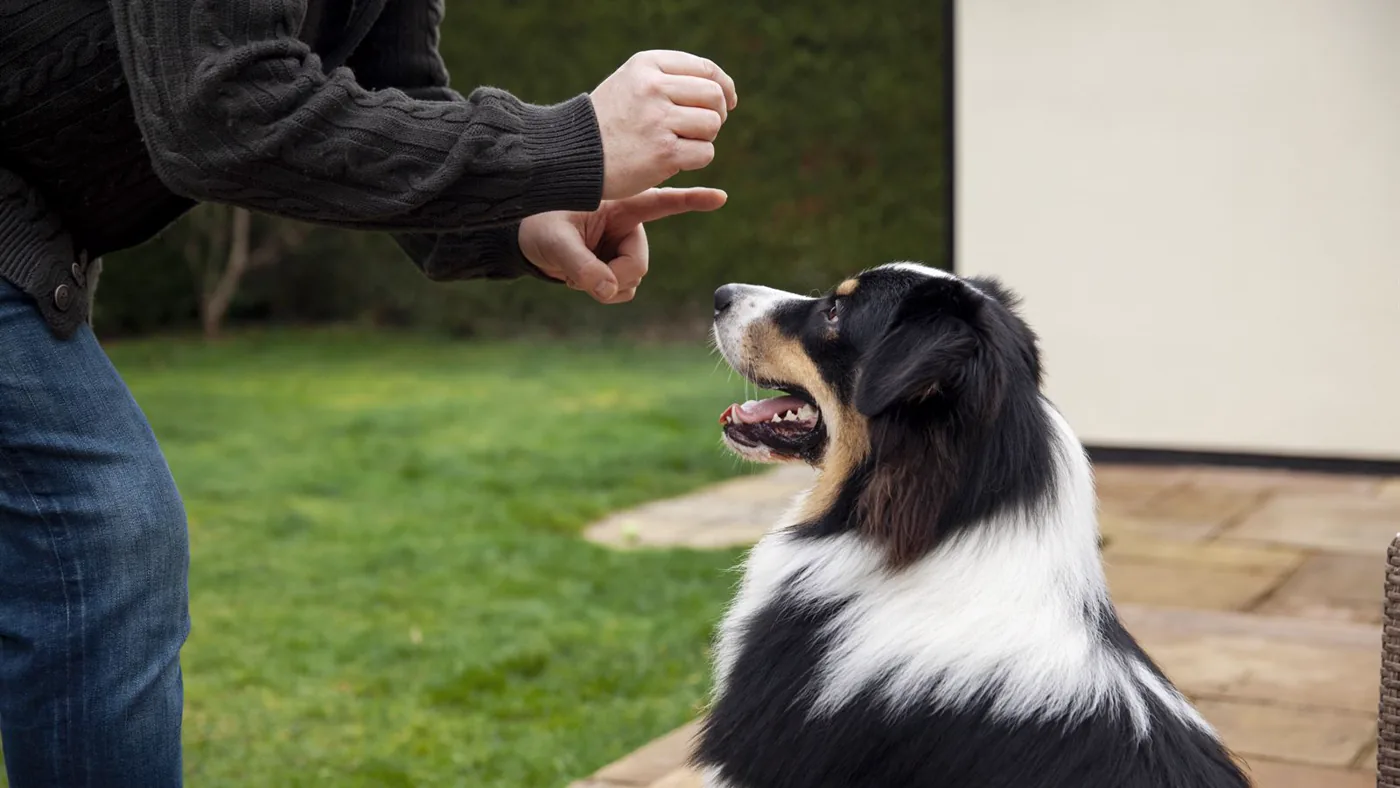
A marker tells the dog exactly which moment earned the reward. Use a clicker or one consistent word such as "yes," delivered the instant the behavior happens, then follow it with the treat. The gap between behavior and reward is where confusion lives: mark late and you may reward the dog for standing up rather than for sitting. The clicker is central to reward-based training precisely because it is faster and more consistent than a human voice.
How long should a training session be?
About five minutes, several times a day. Dogs learn best while they are still engaged, and a session that runs past that point starts teaching frustration. End every session on a success the dog can win easily, so the last thing they remember is getting it right. Three five-minute sessions will out-teach one twenty-minute session almost every time.
How do you add difficulty and keep progress?
Change one variable at a time. Trainers call this proofing, and it runs on three dials — distraction, distance and duration. Get a solid "sit" in the living room, then try the backyard, then the sidewalk, then the park. If the dog fails twice in a row, you moved too fast: drop back to the last level they were reliable at, get two easy wins, and step up more gradually. Raising two dials at once is the most common reason a behavior falls apart.
How do you handle unwanted behavior with positive reinforcement?
Teach the dog what to do in place of it. A dog who jumps at guests is being rewarded by attention, so the fix is to reward four paws on the floor and to remove the attention when they jump. This is called differential reinforcement, and it works because the dog gets a clear, payable alternative. Scolding suppresses the behavior in the moment and teaches nothing about what you wanted. For aggression, severe anxiety or any behavior that risks a bite, work with a credentialed behavior professional and involve your veterinarian.
What are the four quadrants of operant conditioning?
This is where the terminology trips people up. There are not four types of positive reinforcement — there are four quadrants of operant conditioning, and positive reinforcement is one of them. "Positive" means something is added; "negative" means something is taken away. "Reinforcement" makes a behavior more likely; "punishment" makes it less likely.
- Positive reinforcement — add something the dog wants (a treat for sitting). Behavior increases.
- Negative reinforcement — remove something unpleasant (leash pressure releases when the dog yields). Behavior increases.
- Positive punishment — add something unpleasant (a leash correction). Behavior decreases.
- Negative punishment — remove something wanted (attention stops when the dog jumps). Behavior decreases.
Reward-based training leans on the first and fourth. Understanding all four is what lets you explain to a client why the method works.
What tools do professional trainers use?
Less than most people expect. A clicker, a treat pouch, high-value food, a six-foot leash and a long line cover the majority of pet-dog training. Karen Pryor Clicker Training built the modern clicker curriculum, and its markers and guides are in the ShopDot Pet catalog alongside training treats, long lines and puzzle feeders.
If you train professionally, the gear you recommend is a revenue line you may be giving away. Clients ask which clicker and which treats before the first session ends — see what dog trainers make and how the top earners earn from the products they recommend.
FAQ
What is an example of positive reinforcement training dogs?
Asking a dog to sit, marking the moment their back end touches the floor with a click or the word "yes," and immediately giving a treat. The dog learns that sitting produces something good, so they offer it more often. Rewarding four paws on the floor when guests arrive is the same principle applied to jumping.
What is the 3-3-3 rule for dog training?
The 3-3-3 rule describes how a newly adopted dog settles in: roughly three days to decompress, three weeks to learn the household routine, and three months to feel genuinely at home. It is an adjustment guideline for rescue dogs rather than a training technique, and it is a useful reminder to keep early training sessions short and low-pressure.
How do you discipline a dog with positive reinforcement?
By rewarding the behavior you want in place of the one you don't, and by removing the reward the unwanted behavior was earning. A jumping dog is usually being paid in attention, so you reward calm paws on the floor and withhold attention for jumping. For aggression or severe anxiety, work with a credentialed behavior professional and your veterinarian.
What are the 4 types of positive reinforcement?
There are not four types of positive reinforcement. There are four quadrants of operant conditioning: positive reinforcement (add something wanted), negative reinforcement (remove something unpleasant), positive punishment (add something unpleasant) and negative punishment (remove something wanted). Positive reinforcement is one quadrant, and reward-based training relies mainly on it.
Recommending training gear to clients?
Curate a free storefront of the clickers, treats and long lines you already recommend, and earn when clients buy.
Get started free